


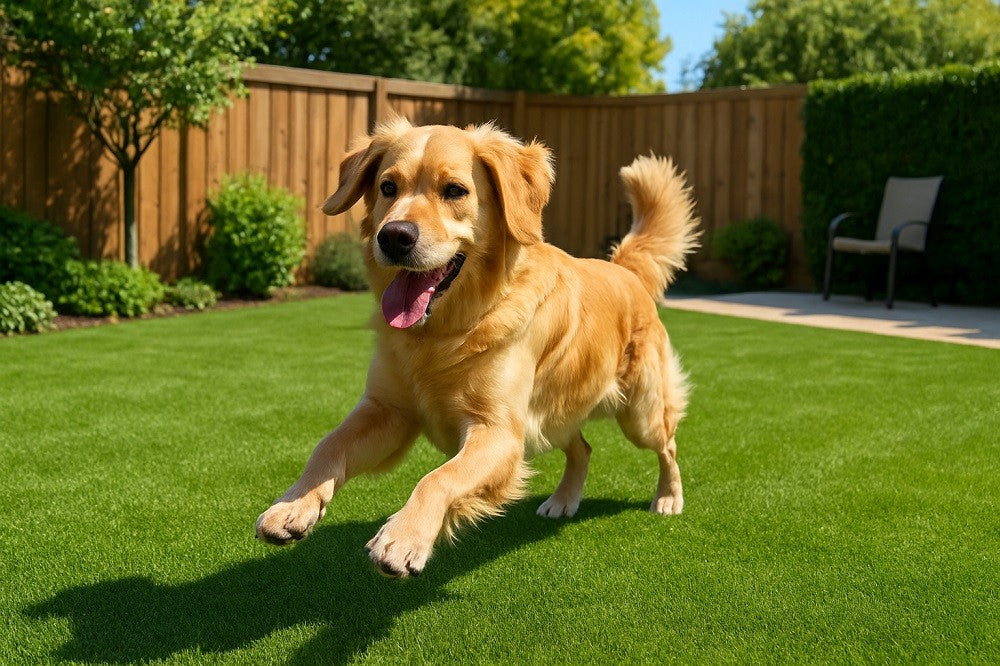
Why Pet Owners Are Switching to Artificial Grass
Common frustrations with natural turf
Natural lawns rarely stay pristine when pets are involved. Claw marks, bald patches, and unsightly yellow spots tend to appear after just a few weeks of regular use. Rain only adds to the trouble, turning grass into a muddy trap that clings to paws and ends up all over the floors.
The routine of reseeding, mowing, and clearing up after every toilet trip becomes a burden. For many households, it’s the tipping point that prompts the search for an easier solution.
How artificial grass solves mess and maintenance
Artificial turf eliminates the cycle of seasonal upkeep. There’s no mowing, fertilising, or waiting for grass to recover after a rainy day. The surface remains clean and consistent year-round. Once installed, it holds up well against repeated use from pets, whether they’re sprinting, lounging, or doing their business.
More importantly, it keeps the indoors cleaner too. Without mud or grass clippings stuck to paws, there’s less time spent scrubbing floors or wiping up after walkies.
Durability Meets Pet-Friendly Design
Resistant to digging and wear
Not every pet is gentle with a garden. Dogs that love to dig or run the same circuit over and over can wear down real turf in no time. A well-made artificial lawn stands up to this type of treatment. Strong yarn fibres, secure backing, and a compacted sub-base work together to resist damage — even from the most enthusiastic of pets.
Safe fibres and non-toxic materials
Pet owners naturally worry about safety, especially when a dog spends hours rolling around on the lawn. Quality artificial grass for pets is made without harmful chemicals. The fibres are designed to be non-toxic and lead-free, reducing health risks from licking or chewing.
Any infill used is typically non-abrasive and pet-safe, so there’s no risk of sharp particles scratching paws or causing irritation.
Drainage performance during wet weather
Poor drainage can quickly turn a garden into a soggy mess. Artificial turf helps sidestep this issue. Built-in perforations allow water and pet urine to pass through efficiently, reducing surface puddles. This means dogs aren’t forced to walk through standing water, and the surface dries faster — making it easier to maintain a hygienic play space.
Hygiene and Clean-Up Made Easy

Urine and waste management
One of the most practical advantages of artificial turf is how straightforward it is to manage pet waste. Solids can be picked up as usual, and the surface rinsed with a hose. Liquids pass through the drainage layer into the sub-base, helping prevent build-up. Unlike natural grass, there are no dirt patches for bacteria to settle in, making the area easier to keep fresh.
Smell control and cleaning tips
A quick rinse now and then keeps smells under control. For deeper cleaning, a mild detergent or pet-friendly turf cleaner can be applied without affecting the look or integrity of the surface. Some homeowners also opt for antimicrobial infill or deodorisers, which help neutralise odours and reduce the need for heavy scrubbing.
Preventing mud trails indoors
Synthetic grass completely removes the issue of muddy paws. It doesn’t matter how much it rains — the surface doesn’t become soft or messy. Dogs can play outside all year round without dragging sludge back into the house. It’s a small change that makes a big difference in keeping the home clean.
Comfort Without Compromise
Soft texture for paws and play
A good quality turf doesn’t just look the part — it feels right underfoot (or paw). Many artificial grass products are designed to mimic the softness of real grass, making them suitable for lounging, zoomies, and play sessions. The cushioned surface is kind to joints, especially for older pets or dogs prone to arthritis.
Temperature regulation in summer
Concerns about heat are common, but not all artificial lawns are the same. Some use UV-resistant coatings or lighter shades to reduce surface temperature in direct sun. Providing shaded spots and adding accessories like cooling mats helps maintain a comfortable play space even during hot spells.
Realistic appearance and feel
For many households, switching to artificial grass isn't just about function — it’s about preserving the look of the garden. High-quality fibres offer a realistic colour blend and natural texture, creating a space that’s practical for pets without sacrificing curb appeal.
Budget Friendly Grass for Long-Term Value
Upfront savings versus maintenance costs
Although the initial cost of installing artificial turf can seem steep, it quickly balances out when maintenance is factored in. No need for lawn feed, seed, weekly mowing, or constant repairs. For pet owners, it also means avoiding costs associated with frequent clean-ups, muddy carpets, and ruined grass. Over time, it becomes a cost-effective choice — particularly for high-traffic gardens.
Matching budget-friendly grass to pet needs
Not all artificial grass is created equal, but that doesn’t mean affordable options can’t deliver. Budget friendly grass tailored to pet use often includes shorter pile heights, durable stitching, and strong backing. It may not have the same softness as premium ranges, but it’s more than suitable for daily wear and active play. Choosing the right grass depends on how the space is used — and how many paws are running across it.
Finance options and free sample services
Cost-conscious customers aren’t left out either. Some suppliers offer 0% financing, helping spread the cost of installation. Others provide free samples, so pet owners can feel the texture and judge colour in natural light before buying. These options reduce risk and ensure the final choice is both pet-appropriate and within budget.
The Environmental Advantage
Water conservation benefits
Traditional lawns demand regular watering, especially in dry months. Artificial turf doesn’t. That reduction in water use is a win for sustainability and helps ease pressure during drought seasons. For those looking to limit their environmental footprint without compromising their garden space, it’s a practical solution.
Reduced chemical usage
Lawn care routines often involve fertilisers, weed killers, and pest control — all of which can be harmful to pets. Artificial grass requires none of that. There’s no need to treat it with potentially toxic products, and no worry about paws tracking chemicals indoors.
Sustainability in synthetic turf
Today’s manufacturers are making conscious improvements to the sustainability of synthetic grass. Recyclable materials, lead-free yarns, and improved manufacturing practices are increasingly common. For households aiming to make greener choices, modern turf options tick more boxes than ever before.